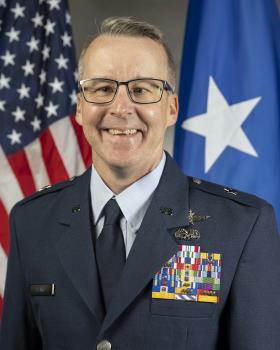
Brigadier General Patrick D. Chard
// TALK: Cybersecurity Warfare
// MISSION_OBJECTIVE (ABSTRACT)
TBD
TBD
// DEPLOYMENT_HISTORY (BIO)
Brig Gen Patrick D. Chard is the Chief of Staff and Director of the Joint Staff, Joint Force Headquarters, West Virginia National Guard (WVNG), Charleston, W.Va. He manages WVNG Joint Staff and Special Program activities, assisting the Adjutant Gene...
Brig Gen Patrick D. Chard is the Chief of Staff and Director of the Joint Staff, Joint Force Headquarters, West Virginia National Guard (WVNG), Charleston, W.Va. He manages WVNG Joint Staff and Special Program activities, assisting the Adjutant General in directing operations, training, and resourcing for state and national missions. Prior to this role, he served as the Deputy Wing Commander for the 130th Airlift Wing (AW). He enlisted in the WVNG in September 1991 as a Command and Control Apprentice at the 130th AW. In October 1996, he became a full-time Logistics Plans Specialist. Commissioned in June 1999 as a distinguished graduate from the Academy of Military Science, he assumed command of the 130th Communications Flight. Since then, he has held numerous command and senior staff roles. Brig Gen Chard has deployed for Operations JOINT FORGE, JOINT ENDEAVOR, and ENDURING FREEDOM, and served as Deputy J6 for Task Force Belle Chasse during Hurricane Katrina (2005). He activated twice for JFHQ DoDIN, US Cyber Command: first in 2018 as Director for Cyber Defense Support to Civil Authorities, and again in 2023 as Deputy Director, J7. Instrumental to the WVNG State Partnership Program, he led the first Air Force SME exchange with the Qatar Emiri Air Force and the first cyber exchange with the Peruvian Armed Forces. A cybersecurity expert, he holds numerous certifications and serves as an advisor and adjunct instructor for Marshall University, the University of Charleston, and WVU Parkersburg.
// PREVIOUS_EXPERIENCE (NOTES)
EDUCATION 1998 BA, West Virginia State College 2007 Squadron Officer School (correspondence) 2011 Air Command & Staff College (correspondence) 2014 MS, Technology Management, Marshall...
EDUCATION 1998 BA, West Virginia State College 2007 Squadron Officer School (correspondence) 2011 Air Command & Staff College (correspondence) 2014 MS, Technology Management, Marshall University 2016 Leadership in Homeland Security & Crisis Mgt., Harvard University 2017 Air War College (correspondence) ASSIGNMENTS (Joint assignments noted inline) Sep 1991 – Oct 1996: Command & Control Specialist, 130th Airlift Wing (AW), Charleston, WV Oct 1996 – Jun 1999: Logistics Plans Specialist, 130th AW, Charleston, WV Jun 1999 – Feb 2007: Commander, 130th Communications Flight, Charleston, WV Feb 2007 – Jul 2015: CIO & Director J6, JFHQ-WV, Charleston, WV (Joint assignment as Lt. Col.) Jan 2016 – Dec 2017: Commander, 167th Force Support Squadron, Martinsburg, WV Jan 2018 – Jun 2020: Commander, 130th Maintenance Group, Charleston, WV Jun 2018 – Oct 2018: Dir., Cyber Defense Support to Civil Authorities, JFHQ DoDIN, Fort Meade, MD (Joint assignment as Col.) Jun 2020 – Feb 2025: Deputy Wing Commander, 130th AW, Charleston, WV Jul 2023 – Sep 2024: Deputy Director, J7, JFHQ DoDIN, Fort Meade, MD (Joint assignment as Col.) Feb 2025 – Present: Chief of Staff, JFHQ, WV Air National Guard, Charleston, WV

Dr. Matthew D Gonzalez
// TALK: Next-Gen Security: Roadmap for the Next Generation
// MISSION_OBJECTIVE (ABSTRACT)
Join us on a brief update on how the UC Cyber Security Programs continue to strengthen our proven foundations, to engineering the future of defense. The University of Charleston is setting the standar...
Join us on a brief update on how the UC Cyber Security Programs continue to strengthen our proven foundations, to engineering the future of defense. The University of Charleston is setting the standard in cybersecurity education. We aren’t just teaching tech, we are forged to train the next generation of cybersecurity warriors. By blending elite technical skills with decisive leadership, UC is arming students to neutralize imminent threats and dominate in a fast-paced digital battlefield.
// DEPLOYMENT_HISTORY (BIO)
Dr. Gonzalez started as an IT Intern, and grew his career as a Developer, Systems Analyst, IT Architect, IT Project Manager, Chief Data Officer, and Department Chair and Professor. Dr. Gonzalez has 25 years of experiences: - Presenti...
Dr. Gonzalez started as an IT Intern, and grew his career as a Developer, Systems Analyst, IT Architect, IT Project Manager, Chief Data Officer, and Department Chair and Professor. Dr. Gonzalez has 25 years of experiences: - Presenting research at Harvard University - Performing training at the Pentagon - Awarded by the National Diversity Council - Gaining the trust of I.T. professionals world wide
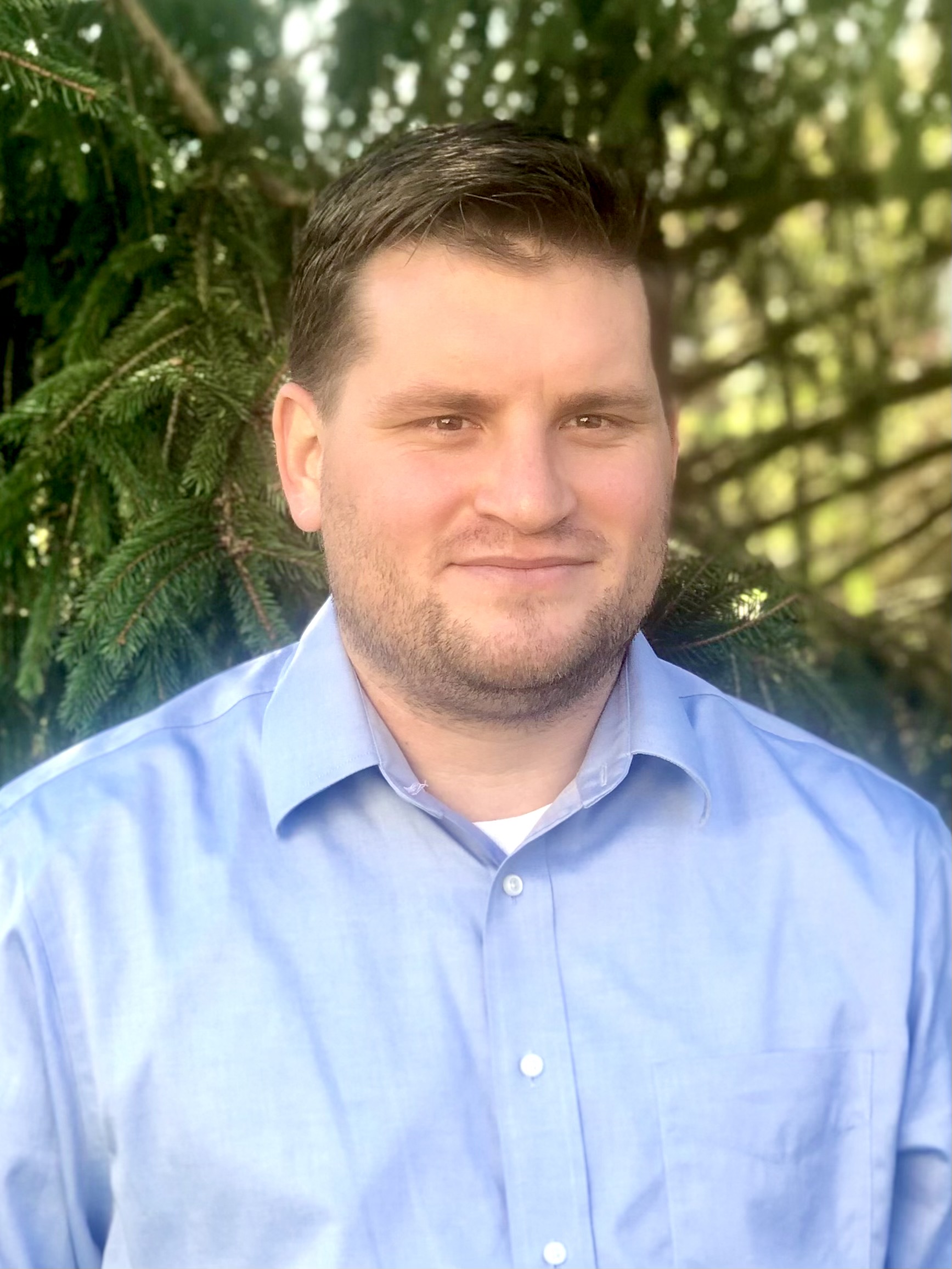
Ian Frist
// TALK: Bring Your Appetite: Aligning Cybersecurity Risk with Enterprise Strategy
// MISSION_OBJECTIVE (ABSTRACT)
Cybersecurity risk isn’t a side dish—it belongs at the head table of enterprise risk management. In this session, Ian Frist, Director of Governance, Risk & Compliance at Corning, explores how organiza...
Cybersecurity risk isn’t a side dish—it belongs at the head table of enterprise risk management. In this session, Ian Frist, Director of Governance, Risk & Compliance at Corning, explores how organizations can stop treating cyber risk as a siloed technical concern and start integrating it into their broader risk appetite framework. Using real-world stories from the trenches (without naming names), Ian will unpack the consequences of misaligned appetites—where security teams over-restrict or under-protect due to unclear enterprise priorities. He’ll challenge the common misconception that cybersecurity risk appetite is just about controls and compliance, and show how it’s really about leadership, business context, and strategic clarity. Attendees will leave with: • A practical framework for aligning cyber risk appetite with enterprise risk appetite • Tips for communicating risk appetite across technical and non-technical stakeholders • A fresh perspective on how to “serve” cybersecurity risk in a way that satisfies the whole organization Whether you’re a seasoned GRC leader or just pulling up a chair to the risk table, this session will help you bring your appetite—and leave with a full plate of actionable insights.
// DEPLOYMENT_HISTORY (BIO)
Ian Frist is a cybersecurity leader with a strategic focus on IT risk and compliance across global operations. As Director of Governance, Risk, and Compliance at Corning, he leads a worldwide team navigating complex regulatory and cybersecurity frame...
Ian Frist is a cybersecurity leader with a strategic focus on IT risk and compliance across global operations. As Director of Governance, Risk, and Compliance at Corning, he leads a worldwide team navigating complex regulatory and cybersecurity frameworks including CMMC, NIS2, China CSL, TISAX, NIST CSF, and Sarbanes-Oxley. Ian brings a unique perspective shaped by experience in both the private sector and government, enabling him to bridge operational realities with strategic oversight. He holds a Master of Science in Cybersecurity from the University of Charleston and completed the Chief Risk Officer program at Carnegie Mellon University’s Heinz College of Information Systems and Public Policy. Ian is a CISSP and maintains a portfolio of additional industry certifications. He also serves as an Adjunct Professor at West Virginia University and volunteers as Vice President of Enterprise Risk Management for the Mountaineer Area Council of Scouting America.

Brett White
// TALK: The Sovereign Stack: Defense in Depth for the Self-Hosted, AI-Powered Smart Home
// MISSION_OBJECTIVE (ABSTRACT)
Most cybersecurity guidance assumes you have a team. A SOC. A vendor. Someone else handling it. But a growing population of engineers, researchers, and practitioners are operating production-grade inf...
Most cybersecurity guidance assumes you have a team. A SOC. A vendor. Someone else handling it. But a growing population of engineers, researchers, and practitioners are operating production-grade infrastructure entirely on their own — running dozens of containerized services, a fleet of IoT devices, and increasingly, local AI agents capable of acting autonomously on that infrastructure. What does serious security look like when the buck stops with you? This talk presents a practitioner’s end-to-end architecture for defense in depth across three interconnected layers: the homelab foundation, the smart home edge, and the AI intelligence layer — drawing from real-world implementation rather than theory. In the first act, we examine network segmentation philosophy for self-hosted stacks running Proxmox, Docker, and zero-trust overlay networks. We cover the most dangerous assumption homelabbers make — the flat network — fine-grained access control group design, secrets management, and why “Cloudflare tunnel plus Nginx Proxy Manager” is a deployment strategy, not a security posture. The second act turns to the IoT edge: the most chaotic, least-auditable layer of any home network. We examine what Zigbee, Z-Wave, and ESPHome actually provide in terms of authentication and encryption — and what they do not — the OTA firmware trust problem, and how a single compromised sensor can become a persistent foothold. A real smart infrastructure deployment covering power monitoring, environmental sensing, radar presence detection, and audio is used as a concrete attack surface case study. The final act addresses the emerging challenge that makes all of this more urgent: adding local AI agents that can act on your infrastructure. We explore why cloud AI is a non-starter for a privacy-first stack, how to architect a local-inference multi-agent system using open-weight models and scoped tool access, and the new threat vectors this introduces — prompt injection, MCP tool misuse, and agent privilege escalation. We close with a framework for treating AI as infrastructure, with all the security discipline that implies. Attendees will leave with a threat model, an architectural philosophy, and concrete implementation patterns applicable to any environment where a single operator is responsible for the full stack.
// DEPLOYMENT_HISTORY (BIO)
Brett is a multi-business owner, computer science professor at the University of Charleston, and homelab practitioner with a decade of experience building self-hosted infrastructure at production scale. His work spans zero-trust network architecture,...
Brett is a multi-business owner, computer science professor at the University of Charleston, and homelab practitioner with a decade of experience building self-hosted infrastructure at production scale. His work spans zero-trust network architecture, containerized service orchestration, IoT and home automation security, and local AI systems, with a consistent focus on privacy-first, open-source solutions over cloud dependency. He teaches technology coursework at the university level, runs a technology-focused podcast covering self-hosting, digital ownership, and privacy, and operates an extensive homelab running over thirty self-hosted services across Proxmox, unRAID, TrueNAS, and Docker environments. He has designed and deployed multi-agent local AI architectures using open-weight models, and leads multiple technology initiatives at the intersection of education, self-sovereignty, and emerging infrastructure.
// PREVIOUS_EXPERIENCE (NOTES)
Host of events such as the Raspberry Jam WV and Wild & Wired WV, and speaker for many events across the east coast and midwest about self-hosted applications, security, and open-source software to encourage ownership and digital sovereignty.
Host of events such as the Raspberry Jam WV and Wild & Wired WV, and speaker for many events across the east coast and midwest about self-hosted applications, security, and open-source software to encourage ownership and digital sovereignty.
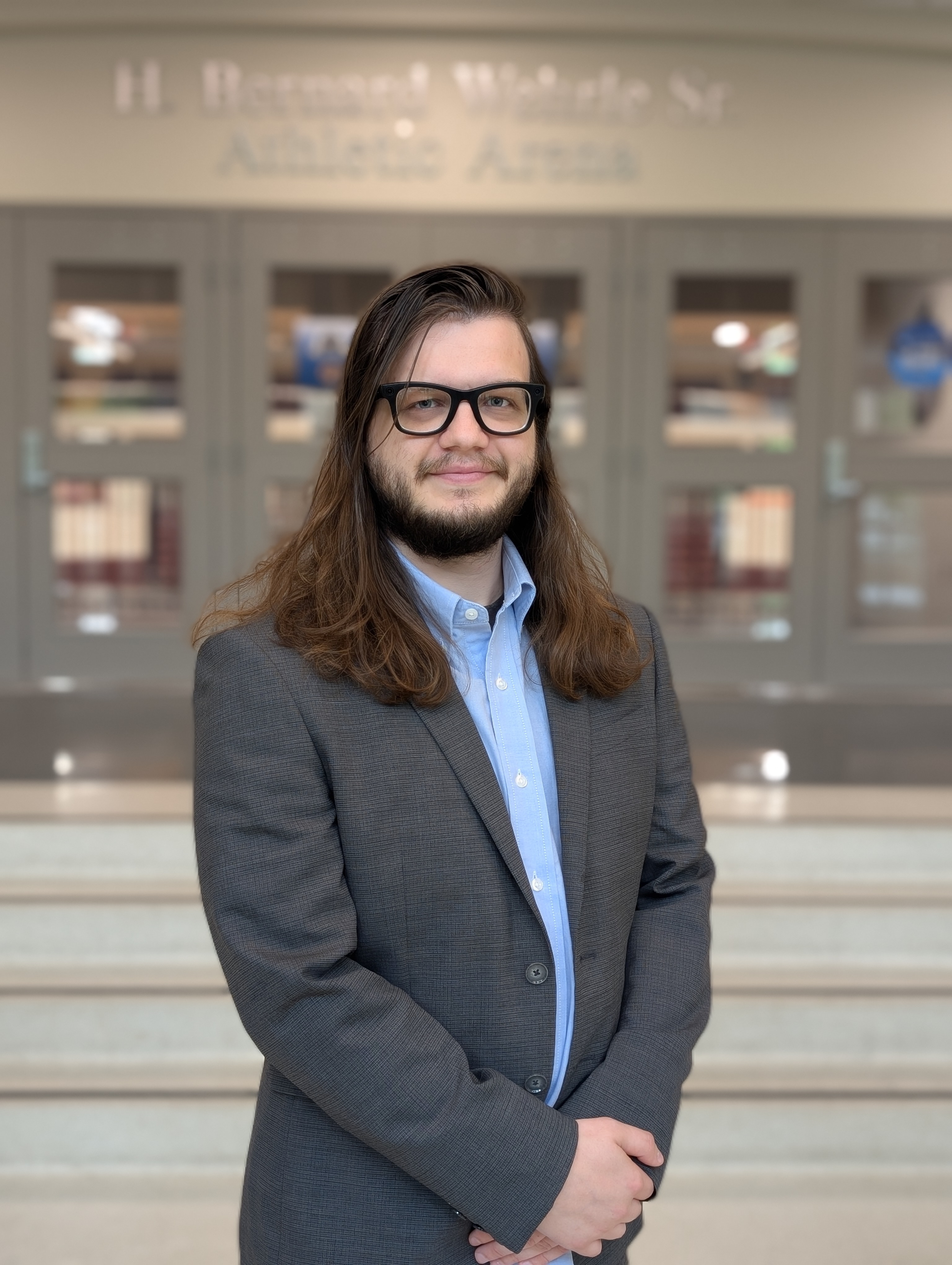
Vincent Smith, Trang "Moon" Bui, and Maria Albores
// TALK: Evaluating Information Leakage and Persistence in ChatGPT, Gemini, and Copilot
// MISSION_OBJECTIVE (ABSTRACT)
Large Language Models (LLMs) are used by millions of users worldwide to perform various tasks and have become a valuable tool for both individuals and businesses. Consistency and cybersecurity are two...
Large Language Models (LLMs) are used by millions of users worldwide to perform various tasks and have become a valuable tool for both individuals and businesses. Consistency and cybersecurity are two of the major concerns for LLMs' evaluation in order to increase the trustworthiness of their behavior. This study focuses on testing the security and consistency measures of the three most popular AI chatbots (i.e., ChatGPT-5, Google Gemini 2.5 Flash, Microsoft Copilot). We hypothesized that the output persistence would be high and the same within the models and across models, and all models would not leak the information that users input to other users through prompts. Twenty fabricated business plans, of which half were defined as "confidential" strings, were developed and input into the three LLMs. Extraction of the information was attempted every twenty-four hours for two consecutive weeks. Results were analyzed using the Jaccard similarity index to compare the outputs between LLMs, identify differences over time, analyze response patterns, and identify any risks in the leaking of information. Over time, all models demonstrated a low level of output consistency, indicating a poor behavior dependability assessment. The outputs of the three models were similar in content, but the expressions were different amongst them. Regarding security, it is unlikely that there was a leakage of confidential information.
// DEPLOYMENT_HISTORY (BIO)
Vincent Smith, PhD is Program Director of Data Analytics and Computer Science and Assistant Professor of Data Analytics at the University of Charleston. He holds a PhD in Data Science, an MA in Psychology, an MA in Mathematics, and a Master's level c...
Vincent Smith, PhD is Program Director of Data Analytics and Computer Science and Assistant Professor of Data Analytics at the University of Charleston. He holds a PhD in Data Science, an MA in Psychology, an MA in Mathematics, and a Master's level certificate in behavioral statistics. His research focuses on applied AI, algorithmic bias, human-AI interaction, and real-world data analytics, with multiple peer-reviewed publications in the International Journal of Advanced Research and related journals. Dr. Smith is also the founder of Horse Creek Cabins, where he applies data science to customer experience. He is an i3 award-winning researcher and a frequent speaker on artificial intelligence and analytics across West Virginia.
// PREVIOUS_EXPERIENCE (NOTES)
• I3 Winner for Faculty/Student Research – 2025 • Selke, P., Smith, V. (2025). The Effectiveness of Translator Apps and AI. I3 Presentation. • Gohil, H., Smith, V. (2024). An Analysis of Algospeak and the Dreaded Algor...
• I3 Winner for Faculty/Student Research – 2025 • Selke, P., Smith, V. (2025). The Effectiveness of Translator Apps and AI. I3 Presentation. • Gohil, H., Smith, V. (2024). An Analysis of Algospeak and the Dreaded Algorithm. Int. J. of Adv. Res. DOI:10.21474/IJAR01/19684 • I3 Winner for Faculty/Student Research – 2024 • Hunkele, C., Smith, V. (2024). An Analysis of the Accuracy and Bias of a Generative AI Model. Int. J. of Adv. Res. DOI:10.21474/IJAR01/18640 • Garrett, M., Harwood, A., Shamblin, J., Smith, V. (2023). YouTube Transcripts Word Frequency Measure. J. Linguistics Culture and Communication. DOI:10.61320/jolcc.v1i2.91-99 • Hoffman, B., Smith, V. (2022). An Analysis of Utility Company Customer Service during the COVID-19 Pandemic. Int. J. of Adv. Res. 30 (Sept.) 10-09. DOI:10.21474/IJAR01/15394 • Smith, V. (2021). AEW and WWE's Wednesday Night Wars: An Early Analysis. Professional Wrestling Studies Journal, vol. 2, no. 1, 47-60. • Smith, V. (2020). Differences in Adult and Child False Memories Based On Different Types Of Associated Words. Int. J. of Adv. Res. 8 (May). 09-15.

Jaidie Vargas
// TALK: Lights Out: Defending the Power Grid in a Cyber Crisis (Virtual Workshop)
// MISSION_OBJECTIVE (ABSTRACT)
What happens when a cyberattack takes down the power grid and you’re the team responsible for responding? This interactive virtual workshop places students in the midd...
What happens when a cyberattack takes down the power grid and you’re the team responsible for responding? This interactive virtual workshop places students in the middle of a simulated cyber incident targeting a U.S. power grid. Participants will step into roles across security, operations, and leadership as the scenario unfolds in real time, making decisions under pressure as new information (“injects”) is introduced. Through this guided tabletop exercise, students will explore how cyberattacks impact critical infrastructure, how defenders coordinate response efforts, and what trade-offs must be made when systems that people depend on cannot simply be shut down. The session introduces core concepts in incident response, risk, and resilience while also highlighting the real-world consequences of cyber failures in essential services. No prior experience is required! Just a willingness to think critically, collaborate, and step into the role of a cyber defender.
// DEPLOYMENT_HISTORY (BIO)
Jaidie Vargas is a cybersecurity leader, U.S. Navy veteran, and AI researcher with over 14 years of experience across defense, aerospace, and public-sector critical infrastructure. She has worked in high-stakes environments where cyber decisions dire...
Jaidie Vargas is a cybersecurity leader, U.S. Navy veteran, and AI researcher with over 14 years of experience across defense, aerospace, and public-sector critical infrastructure. She has worked in high-stakes environments where cyber decisions directly impact essential services and communities. She is the Co-Founder and Executive Director of Amigas in Tech and the creator of a cyber tabletop program designed to teach students how to think like defenders in real-world scenarios. Jaidie is currently pursuing a PhD in Artificial Intelligence, focusing on AI governance and the intersection of technology, policy, and community impact.
Shekinah Apedo, Esq.
// TALK: The Blockchain Attack Lab: Teaching Cyber Defense Through Digital Asset Incident Response
// MISSION_OBJECTIVE (ABSTRACT)
Cybersecurity education often focuses on traditional network threats, but students are increasingly entering a world shaped by blockchain systems, AI tools, digital assets, and decentralized infrastru...
Cybersecurity education often focuses on traditional network threats, but students are increasingly entering a world shaped by blockchain systems, AI tools, digital assets, and decentralized infrastructure. This talk introduces the Blockchain Attack Lab, a hands-on educational model that uses real-world-inspired incident scenarios to teach cybersecurity fundamentals, attacker mindset, governance failures, and response strategy. The session will explain how blockchain and digital asset incidents can be used to help students understand threat modeling, incident response, smart contract risk, operational security, and decision-making under pressure. Rather than focusing on speculation or cryptocurrency prices, the talk frames blockchain as a practical cybersecurity training environment where technical, legal, business, and governance issues collide. Attendees will leave with a better understanding of how emerging technology scenarios can be used to prepare students for modern cyber threats and workforce opportunities.
// DEPLOYMENT_HISTORY (BIO)
Shekinah Apedo is an attorney and technology educator focused on blockchain, cybersecurity, artificial intelligence, and digital infrastructure. She is the founder of the West Virginia Blockchain Foundation, where she develops workforce and education...
Shekinah Apedo is an attorney and technology educator focused on blockchain, cybersecurity, artificial intelligence, and digital infrastructure. She is the founder of the West Virginia Blockchain Foundation, where she develops workforce and educational programs that connect students with emerging technology ecosystems. Her work includes university workshops, hackathons, policy education, and the Blockchain Attack Lab, a hands-on exercise that teaches incident response and risk management through real-world-inspired scenarios.
// PREVIOUS_EXPERIENCE (NOTES)
Shekinah Apedo is the founder of the West Virginia Blockchain Foundation and creator of the Blockchain Attack Lab, which has been delivered to university students as a hands-on cybersecurity and emerging technology exercise. She has taught blockchain...
Shekinah Apedo is the founder of the West Virginia Blockchain Foundation and creator of the Blockchain Attack Lab, which has been delivered to university students as a hands-on cybersecurity and emerging technology exercise. She has taught blockchain and digital asset workshops at multiple colleges and universities and will teach Intro to Blockchain Technology at Marshall University in Fall 2026. She is also an attorney with experience in cryptocurrency, policy, and technology education.

Mike Stockman
// TALK: Zero Trust for Autonomous AI: Securing Enterprise Multi-Agent Systems
// MISSION_OBJECTIVE (ABSTRACT)
As enterprise AI evolves from standalone large language models to autonomous multi-agent systems, cybersecurity faces a fundamental shift in how trust is established, monitored, and enforced. These in...
As enterprise AI evolves from standalone large language models to autonomous multi-agent systems, cybersecurity faces a fundamental shift in how trust is established, monitored, and enforced. These intelligent agent ecosystems are capable of reasoning, collaborating, invoking enterprise tools, and making autonomous decisions across critical business processes. While this transformation promises significant gains in productivity and operational efficiency, it also introduces new attack surfaces that extend far beyond traditional application security. This presentation introduces a practical cybersecurity framework for securing enterprise multi-agent systems using Zero Trust principles. Rather than treating AI as a single protected application, the session demonstrates how every autonomous agent, orchestration service, memory store, vector database, external tool, and inter-agent communication channel must be considered an independent security principal requiring continuous authentication, authorization, validation, and monitoring. Drawing on the KnowledgeView reference architecture, attendees will explore how dedicated security, governance, and trust agents can continuously evaluate agent behavior, verify data provenance, detect prompt injection and retrieval poisoning, enforce least-privilege access, monitor autonomous decision making, and maintain immutable audit trails. The presentation also examines emerging threats including agent impersonation, memory poisoning, cross-agent trust exploitation, malicious tool invocation, and autonomous privilege escalation, along with architectural patterns that improve resilience, reliability, and operational trust. Attendees will leave with a reference architecture and implementation roadmap for designing secure, observable, and trustworthy enterprise AI ecosystems. As organizations move toward increasingly autonomous digital workforces, adopting Zero Trust for AI Agents provides a practical foundation for protecting enterprise systems while enabling responsible AI innovation.
// DEPLOYMENT_HISTORY (BIO)
Mike Stockman is the Founder and CEO of BizSolutions.Tech, a veteran-owned technology consulting firm specializing in enterprise intelligent automation, and ServiceNow solutions. With more than 35 years of experience in intelligent systems, software...
Mike Stockman is the Founder and CEO of BizSolutions.Tech, a veteran-owned technology consulting firm specializing in enterprise intelligent automation, and ServiceNow solutions. With more than 35 years of experience in intelligent systems, software engineering, and enterprise architecture, he has led the design and implementation of secure, mission-critical solutions for government and commercial organizations. Mike's career includes research supporting U.S. Air Force advanced technology programs, DARPA-related initiatives, and the Strategic Defense Initiative, where he worked on distributed intelligent systems and autonomous agent technologies. As a former Senior Research Scientist at Intel Corporation, he contributed to the advancement of multi-agent system standards through the Foundation for Intelligent Physical Agents (FIPA), helping shape technologies that underpin today's autonomous AI ecosystems. In addition to leading enterprise initiatives, Mike serves as an Adjunct Professor at the University of Charleston, where he teaches Machine Learning, Software Engineering, Web Application Development, Data Analytics, and Intro to Data Science. He is also a ServiceNow Authorized Instructor and frequently presents on technology capabilities and careers in technology. His current research focuses on applying Zero Trust security principles to autonomous multi-agent AI systems, developing architectures that improve the security, reliability, and trustworthiness of enterprise AI while enabling organizations to safely adopt intelligent autonomous technologies.
// PREVIOUS_EXPERIENCE (NOTES)
This presentation is based on ongoing research and development of KnowledgeView, a next-generation enterprise AI platform investigating the application of Zero Trust cybersecurity principles to autonomous multi-agent systems. The research focuses on...
This presentation is based on ongoing research and development of KnowledgeView, a next-generation enterprise AI platform investigating the application of Zero Trust cybersecurity principles to autonomous multi-agent systems. The research focuses on securing intelligent agent ecosystems through identity-based trust, least-privilege access, continuous validation, provenance tracking, behavioral monitoring, and human-in-the-loop governance. KnowledgeView serves as a reference architecture for evaluating how specialized AI agents can securely collaborate across enterprise workflows while defending against emerging threats such as prompt injection, retrieval poisoning, agent impersonation, memory manipulation, and autonomous privilege escalation. The session shares architectural patterns, lessons learned, and practical implementation strategies applicable to organizations adopting enterprise AI. Presenter Notes The session is vendor-neutral and focuses on practical cybersecurity architectures, Zero Trust principles for autonomous AI, and emerging security challenges associated with enterprise multi-agent systems. Attendees will leave with actionable design patterns and architectural guidance that can be applied across public and private sector environments.

Luke Brumfield
// TALK: Architectural Frameworks for Cryptographic Provenance and Runtime Attestation
// MISSION_OBJECTIVE (ABSTRACT)
Most enterprise networks assume their infrastructure is secure because they buy expensive vendor contracts and look at compliance dashboards. In a real conflict, an audit checklist doesn't stop a...
Most enterprise networks assume their infrastructure is secure because they buy expensive vendor contracts and look at compliance dashboards. In a real conflict, an audit checklist doesn't stop a supply chain injection. This session breaks down a bare-metal execution architecture that treats the entire stack—from foreign-manufactured silicon up to userland applications—as actively hostile. This technical briefing introduces an end-to-end architecture designed to enforce system integrity in zero-isolation, multi-tenant environments where infrastructure is fundamentally unverified. We examine the structural implementation of the Decentralized Cryptographic Attestation Protocol (DCAP)—a system that decouples raw code execution from platform security dependencies. We will map out a deployment pipeline built on multi-tiered, segregated subnets designed to handle code from the open wilderness up to Impact Level 5 boundaries. The layout uses a dirty ingestion engine for public mirrors, an isolated scanning zone, and a completely stateless, network-isolated build sandbox driven by the Nix methodology. The objective is to demonstrate that strict mathematical proof and absolute build determinism can make physical infrastructure isolation requirements, and the hostility of the hardware itself, less relevant to operational safety.
// DEPLOYMENT_HISTORY (BIO)
Luke Brumfield is a Senior Systems Infrastructure and Cloud Architect. His technical background centers on site reliability engineering (SRE), distributed systems, and building IL5 compliant deployments.
Luke Brumfield is a Senior Systems Infrastructure and Cloud Architect. His technical background centers on site reliability engineering (SRE), distributed systems, and building IL5 compliant deployments.
// PREVIOUS_EXPERIENCE (NOTES)
13+ years of progressive commercial systems development, programming, and site reliability engineering (SRE) across complex enterprise data environments. Remote since 2017. Dell, Equifax, Google (contractor, of cours...
13+ years of progressive commercial systems development, programming, and site reliability engineering (SRE) across complex enterprise data environments. Remote since 2017. Dell, Equifax, Google (contractor, of course).

Wendy Goodenough, JD, MA CEO, DIGIT3
// TALK: A Tale of Two Cities: How High-Profile Ransomware Attacks in Columbus; Cleveland Helped Prompt State-Wide Cybersecurity Requirements for Government Entities in the State of Ohio
// MISSION_OBJECTIVE (ABSTRACT)
Ohio Revised Code §9.64 was enacted to address the growing threat of cyberattacks against political subdivisions in the State of Ohio. Before ORC §9.64, many local gove...
Ohio Revised Code §9.64 was enacted to address the growing threat of cyberattacks against political subdivisions in the State of Ohio. Before ORC §9.64, many local governments lacked consistent, effective cybersecurity frameworks. The law reflects a clear shift toward proactive, standardized cybersecurity requirements for state and local government entities, which is part of a growing trend nationwide. During this session we will review significant ransomware incidents that impacted two Ohio cities. We will discuss the handling of these incidents by elected officials, how the attacks disrupted essential services, the information that was compromised, and how the attacks helped facilitate the enactment of ORC §9.64. We will review the requirements of ORC §9.64, which mandates that political subdivisions adopt a cybersecurity program consistent with national best practices, dictates reporting requirements in the event of a cybersecurity incident and sets forth clear rules for political subdivisions prior to making ransomware payments. We will discuss real, practical implications political subdivisions are facing implementing ORC §9.64 requirements and conclude with a review of state oversight efforts, including audits by the Auditor of State to ensure statutory compliance.
// DEPLOYMENT_HISTORY (BIO)
Wendy holds a bachelor’s degree from The Ohio State University, a master’s degree from Marshall University, and Juris Doctor from The Ohio State University. Wendy is a licensed attorney in Ohio, West Virginia, and Kent...
Wendy holds a bachelor’s degree from The Ohio State University, a master’s degree from Marshall University, and Juris Doctor from The Ohio State University. Wendy is a licensed attorney in Ohio, West Virginia, and Kentucky. Wendy is the CEO of DIGIT3, LLC, a managed services and cybersecurity solutions company that provides services in several states, including Ohio, West Virginia, and Kentucky. Wendy applies her experience at DIGIT3 by helping businesses understand and adhere to contractual, industry, and regulatory requirements relating to technology and cybersecurity. She works with businesses by identifying and remediating identified risks. She regularly works with clients to draft IT-related compliance documents such as Cybersecurity Programs, Security of Information Policies; Procedures, Incident Response Plans, and Disaster Recovery Plans. Having worked as a Compliance Officer; In-House Counsel for a large multi-state corporation, In-House Counsel for a hospital system, and a Regional Ethics; Compliance Manger for a leading Fortune 500 Company, Wendy has extensive experience in organizational compliance, managing organizational risk, policy development, and staff training.
// PREVIOUS_EXPERIENCE (NOTES)
13+ years of progressive commercial systems development, programming, and site reliability engineering (SRE) across complex enterprise data environments. Remote since 2017. Dell, Equifax, Google (contractor, of cours...
13+ years of progressive commercial systems development, programming, and site reliability engineering (SRE) across complex enterprise data environments. Remote since 2017. Dell, Equifax, Google (contractor, of course).
Steve Payerle
// DEPLOYMENT_HISTORY (BIO)
Steve Payerle is the CEO of Next Level Technologies, a managed IT services and cybersecurity firm serving organizations throughout the Midwest and beyond from offices in Columbus, Ohio, and Charleston, West Virginia. Over th...
Steve Payerle is the CEO of Next Level Technologies, a managed IT services and cybersecurity firm serving organizations throughout the Midwest and beyond from offices in Columbus, Ohio, and Charleston, West Virginia. Over the course of his career, Steve has helped hundreds of small and mid-sized businesses navigate the increasingly complex intersection of technology, cybersecurity, and business operations. His leadership philosophy is built on a simple principle: technology should reduce risk, improve productivity, and help organizations achieve their goals, not become another obstacle to overcome. Steve is passionate about building long-term partnerships with clients, developing high-performing teams, and creating a culture rooted in integrity, accountability, and service. He believes the best technology decisions begin with understanding the business problem first, then applying the right solution.
// PANEL DISCUSSIONS
Collaborative insights and debates on the future of cyber defense.

University of Charleston Student Showcase
// TALK: University of Charleston Student Showcase
// MISSION_OBJECTIVE (ABSTRACT)
Junior and senior students at the University of Charleston will be presenting their original projects related to cybersecurity. Each student will have a 5-10 minute presentation.
Junior and senior students at the University of Charleston will be presenting their original projects related to cybersecurity. Each student will have a 5-10 minute presentation.
// DEPLOYMENT_HISTORY (BIO)
A showcase of student-developed projects relating to Cybersecurity by students majoring in Artificial Intelligence, Cybersecurity, Computer Science, Data Science, Information Technology, or Video Game Development.
A showcase of student-developed projects relating to Cybersecurity by students majoring in Artificial Intelligence, Cybersecurity, Computer Science, Data Science, Information Technology, or Video Game Development.
Women in Tech Discussion
// TALK: Behind the Terminal: Offensive, Defensive, and Governance Realities of the Female Craft
// MISSION_OBJECTIVE (ABSTRACT)
To dissect the ground-truth technical, systemic, and tactical challenges faced by female practitioners executing missions across the cybersecurity landscape. This panel bypasses generic talking points...
To dissect the ground-truth technical, systemic, and tactical challenges faced by female practitioners executing missions across the cybersecurity landscape. This panel bypasses generic talking points to analyze the realities of offensive security, tactical defense, and AI/blockchain governance. By examining the cross-sections of Red Teaming, Incident Response, and legal compliance, the operatives will map out how diverse cognitive approaches directly strengthen system resilience. Attendees will gain actionable insights into navigating high-stakes risk management and scaling secure architecture while operating as the minority in highly specialized technical theaters.
// DEPLOYMENT_HISTORY (BIO)
This multi-disciplinary unit brings together elite expertise spanning the entire lifecycle of modern technical operations. The panel features Shekinah Apedo, Esq., a legal operative and founder of the West Virginia Blockchain Foundation who commands...
This multi-disciplinary unit brings together elite expertise spanning the entire lifecycle of modern technical operations. The panel features Shekinah Apedo, Esq., a legal operative and founder of the West Virginia Blockchain Foundation who commands the Blockchain Attack Lab to train teams in live incident response; Jaidie Vargas, Executive Director of Amigas in Tech and AI PhD researcher specializing in defensive tabletop simulations and AI governance; Caroline Starr, a veteran educator turned Red Teamer who leverages two decades of human behavior management to excel in adversary simulation and social engineering; Wendy Goodenough, COO at DIGIT3 with 25+ years of legal and corporate risk management experience specializing in cybersecurity compliance and IRS/FTC regulatory mandates; Olivia Goodenough, an entrepreneurial strategist at DIGIT3 translating complex technical telemetry into secure scaling and IT consulting strategies for regional enterprises; and Christie Trent, a veteran full-stack software engineer whose non-traditional deployment path took her from a self-taught coder to engineering U.S. Navy night-vision applications. Operating out of a highly focused remote environment, Christie currently specializes in architecting autonomous agentic systems and local LLM pipelines for enterprise logistics. (With field support from technical operative Ashley Wilson, whose tactical profile is currently synchronizing).
AI Compliance Discussion
// TALK: Algorithmic Accountability: Navigating AI Compliance, Risk Governance, and Adversarial Guardrails
// MISSION_OBJECTIVE (ABSTRACT)
To map the rapidly shifting theater of artificial intelligence compliance and tactical risk management. As organizations race to deploy Large Language Models and autonomous frameworks, they face an un...
To map the rapidly shifting theater of artificial intelligence compliance and tactical risk management. As organizations race to deploy Large Language Models and autonomous frameworks, they face an unprecedented collision of technical innovation, aggressive regulatory oversight, and novel adversarial attack vectors. This panel will move past theoretical ethics to confront the structural engineering realities of AI safety: securing data pipelines, defending against prompt injection and model poisoning, and establishing audit trails that satisfy evolving legal frameworks. By evaluating the intersections of defensive security architecture, academic policy, and national strategy, this task force will provide operational blueprints for maintaining strict corporate and governmental compliance without throttling automated execution.
// DEPLOYMENT_HISTORY (BIO)
This multi-disciplinary strategy unit unites elite policy architects, defense scientists, and offensive operators to dissect the algorithmic threat landscape. The panel features P.W. Singer, a globally recognized strategic futurist analyzing the macr...
This multi-disciplinary strategy unit unites elite policy architects, defense scientists, and offensive operators to dissect the algorithmic threat landscape. The panel features P.W. Singer, a globally recognized strategic futurist analyzing the macro-scale impacts of autonomous systems and digital warfare; Lee Ayers, a veteran CSO and Technology Director specializing in infrastructure engineering, penetration testing, and tactical policy; Dr. Matthew Gonzalez, Cyber Security Program Director at UCWV, driving framework and structural compliance research; Caroline Starr, an offensive Red Teamer focusing on human-element vulnerabilities and social engineering risks within automated tech stacks; Brett White, a computer science professor at UCWV, enterprise multi-business owner, and homelab architect who designs secure, local multi-agent AI architectures and zero-trust infrastructure; Dr. Vincent Smith, UCWV's Program Director of Data Analytics and Computer Science, an award-winning data scientist and behavioral statistician researching algorithmic bias, applied AI, and human-AI interaction frameworks; Mike Stockman is the Founder and CEO of BizSolutions.Tech and an Adjunct Professor at the University of Charleston. A U.S. Air Force veteran and former Intel Senior Research Scientist, he has more than 35 years of experience in intelligent systems, software engineering, enterprise architecture, and advanced technology initiatives, including work related to multi-agent systems, Air Force programs, and industry standards on intelligent agents (FIPA). His current work focuses on securing and governing autonomous enterprise AI through zero-trust principles, dynamic trust evaluation, and evidence-based controls. Tony Brown, CEO of KDE Technology, a strategic business operator who anchors technical compliance deployments by bridging the gap between design engineering, human resource management, and customer-centric operational execution.

Red Team Operations Discussion
// TALK: Breaching the Perimeter: Adversary Simulation, Infrastructure Exploitation, and the Human Element
// MISSION_OBJECTIVE (ABSTRACT)
To deconstruct the anatomy of a modern breach from the perspective of the attackers, the infrastructure architects who build the targets, and the executives who manage the fallout. This panel moves be...
To deconstruct the anatomy of a modern breach from the perspective of the attackers, the infrastructure architects who build the targets, and the executives who manage the fallout. This panel moves beyond automated vulnerability scanning to explore full-scope Red Teaming—where advanced persistent threat (APT) simulation, social engineering, and network exploitation collide. The operatives will discuss how offensive engagements identify critical blind spots in both complex server architectures and human behavior. Attendees will learn how to translate tactical offensive findings into strategic business defense, proving that the best way to secure a perimeter is to hire someone to break it.
// DEPLOYMENT_HISTORY (BIO)
This tactical strike group unites offensive specialists, infrastructure architects, and executive leadership to decode the realities of adversary simulation. The panel features Lee Ayers, a veteran CSO and Technology Director specializing in penetrat...
This tactical strike group unites offensive specialists, infrastructure architects, and executive leadership to decode the realities of adversary simulation. The panel features Lee Ayers, a veteran CSO and Technology Director specializing in penetration testing and tactical defense policy; Caroline Starr, an offensive Red Teamer who leverages two decades of human behavior management to exploit social engineering vectors and bypass organizational perimeters; Tony Brown, CEO of KDE Technology, who bridges the critical gap between raw offensive security findings and strategic, board-level business execution; Jeff Nichols, CIO of KDE Technology and a veteran systems architect with deep-stack expertise in Cisco networking and electrical engineering, providing the essential perspective on how complex server infrastructures are built—and broken; and Matthew Rollins, Chief Development Operations Engineer at KDE Technology, a cybersecurity and infrastructure veteran with over two decades of technical operations experience who optimizes and hardens the complex development pipelines that adversaries actively attempt to exploit.